When to Rob a Bank. Steven D. Levitt & Stephen J. Dubner. 2015. William Morrow. 405 pages.
Rating: 3/5
For a collection of blog posts, this isn't bad. It is the fourth book in the Freakonomics series. I can't compare this to the others because I haven't read them. I imagine this one is a bit more freeform. They loosely tie their selections together under some pretty broad categories.
These guys are clearly intelligent. Despite some quirky subjects, they do take themselves fairly seriously. It happened that I was reading this while taking an economics course, so it was fairly relevant for me. I think this made the book more enjoyable than I would have found it otherwise.
If I had to do it over again, I would want to read Freakonomics first, then maybe come to this book.
Welcome! This is primarily a place for me to post book reviews. Lately I've been reading a lot of graphic novels. Other books that interest me will show up here as well.
Showing posts with label William Morrow. Show all posts
Tuesday, April 25, 2017
Sunday, December 11, 2016
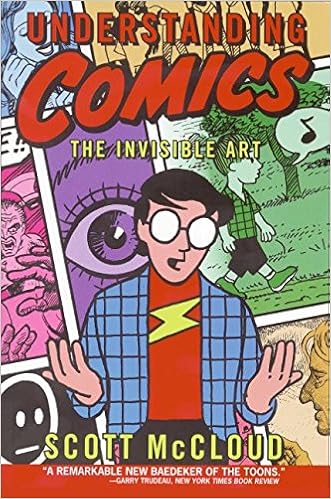
Understanding Comics Review
Understanding Comics: The Invisible Art. Scott McCloud. 1994. William Morrow Paperbacks. 224 pages.
Rating: 5/5
As a comics fan, there was a pretty good chance I was going to love this book. McCloud takes a stab at explaining why people like comics. What about them resonates with us? What makes them unique? How does this particular format compare to other forms of media?
I think what made this book work so well for me is the format itself. It is written as a comic book. This allows McCloud to utilize the page to show the concepts that he talks about throughout. Sometimes it is simple and seems unnecessary, but might be helpful to someone that doesn't read comics. And it is meant to be accessible for anyone, whether they are regular comics readers or not.
The book covers a lot of different topics from the panels and the space in between, known as gutters, to the passage of time and expression of emotions. Every single one comes with examples to guide the reader through his thought process. There are a couple ideas that I did not agree with, but it didn't taint my reading of the book. He puts it out there that the book is meant to foster discussion about comics and to get people thinking about the way they work. Everything in this book falls under that umbrella. It did a great job of getting me to think about comics with some more depth.
Subscribe to:
Posts (Atom)