Sunday, December 11, 2016

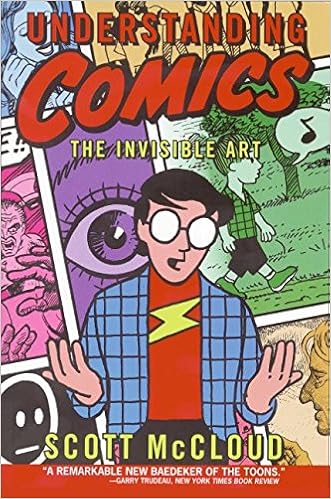
Understanding Comics Review

Understanding Comics: The Invisible Art. Scott McCloud. 1994. William Morrow Paperbacks. 224 pages.

Rating: 5/5

As a comics fan, there was a pretty good chance I was going to love this book. McCloud takes a stab at explaining why people like comics. What about them resonates with us? What makes them unique? How does this particular format compare to other forms of media?

I think what made this book work so well for me is the format itself. It is written as a comic book. This allows McCloud to utilize the page to show the concepts that he talks about throughout. Sometimes it is simple and seems unnecessary, but might be helpful to someone that doesn't read comics. And it is meant to be accessible for anyone, whether they are regular comics readers or not.

The book covers a lot of different topics from the panels and the space in between, known as gutters, to the passage of time and expression of emotions. Every single one comes with examples to guide the reader through his thought process. There are a couple ideas that I did not agree with, but it didn't taint my reading of the book. He puts it out there that the book is meant to foster discussion about comics and to get people thinking about the way they work. Everything in this book falls under that umbrella. It did a great job of getting me to think about comics with some more depth.

Thursday, December 8, 2016

These Are My Friends on Politics Review

These Are My Friends on Politics: A Children's Book for Adults (Who Occasionally Behave Like Kids). Billy O'Keefe. 2016. Inkshares. 64 pages.

Rating: 2/5

Disclaimer: I received a free copy via Goodreads Giveaways in exchange for an honest review.

This book didn't strike a chord with me at all. Maybe I'm just lucky that the people in my life don't act anywhere near what is depicted in this book. It mostly is poking fun at the way people behave when it comes to politics. And there are funny parts. I think the creator has a good pulse on some common social behaviors. Too bad those are just asides to the main focus, which is the way people discuss politics.

The art is cartoonish, which is expected given the subtitle. The interior drawings match the cover art, which is nice to see. Being a creator owned piece rather than coming from a large publisher probably plays a part in that. The layout didn't really work for me though. Every page has the illustrations at the top, depicting all of the characters on the cover image interacting in different ways. These might be the best part of the book because they can be hilarious. Just keep an eye on the pets and the baby. The bottom portion of the page contains the text. It's not a terrible layout, but it felt like two separate pieces that didn't get integrated.

If you want to see people argue about politics, this is the book for you. More importantly, if you like supporting indie writers, I recommend picking it up. It wasn't the right book for me and that's ok.

Wednesday, December 7, 2016

Champions: No Time For Losers Review

The Champions: No Time For Losers. Tony Isabella, Bill Mantlo, Don Heck, George Tuska, John Byrne, and Gil Kane. 2016. Marvel. 99 pages.

Rating: 2/5

The Champions is a superhero group set in the Marvel universe led by Black Widow. The other members of the team are Hercules, Angel, Iceman, and Ghost Rider. It's an odd mix of characters, but they actually work well together.

There are two story arcs in this book. The story arcs are about as ridiculous as the team itself. In the first arc, Pluto, the god of the underworld, attacks the UCLA campus in an attempt to capture Hercules and Venus, the goddess of love. His plan is to force them to marry his allies and use that as leverage to be able to take over Olympus. The second arc features a villain known as the Swarm, a former Nazi that now has control over killer bees. That should give you an idea of what to expect.

The stories actually aren't that bad. They are put together pretty well. As odd as it seems that these particular characters come together, there are reasons for each of them to be in the area when the attacks occur. Where the book falls short for me is in the style of the book. These stories were originally published in the 1970s, and it shows. There is too much repetition as the characters recap what happened in the previous issues. I understand why it was done that way, but it breaks me out of the story and makes the whole experience less enjoyable.

The art is decent. It is dated a bit, much like some of the writing elements used. There are only a couple times where it struck me as being really good. The book is somewhat progressive by putting Black Widow in the lead role on the team. It's an interesting time capsule of Marvel comics, but nothing too exciting.

I received this book as part of the November 2016 box from Comic Bento.

The Death-Defying Doctor Mirage Review

The Death-Defying Doctor Mirage. Jen Van Meter, Roberto de la Torre, and David Baron. 2015. Valiant Entertainment. 128 pages.

Rating: 5/5

I was excited to read this book. The title and the cover art piqued my interest immediately. I had a vague notion of what the story was about when I picked it up. For met it hit on all cylinders to deliver a good story.

When we meet the heroine, Shan Fong, she is at a support group. She is there to provide closure for some widows using her ability to speak with the dead. The kicker is that her own husband, Hwen, passed away and she is unable to locate his spirit. When an opportunity that seems too good to be true comes along, Shan Fong is skeptical, but can she pass on something that may result in finding her love?

The story uses a lot of really interesting elements. It is part ghost story, part Greek tragedy, with a little bit of Faust thrown in for good measure. Let's not forget the detective, folk magic, and fairy tale elements either. With all this going on, the story could get a bit muddled. The creators handle it wonderfully though. It is layered really well so that the reader is gradually drawn into this mystical world. Shan Fong's past and relationship with Hwen unfold as the story progresses too.

And the art is fantastic. It took me a while to get used to it though. The style isn't quite as polished as I've seen in other books. It sort of reminds me of Mike Mignola's art on the Hellboy series without being as cartoonish. Anyway, the colors are great. The variety really make the pages pop at times, especially once Shan Fong enters the Deadside. It can go from dark and oppressive to bright and open quickly. The use of the different speech bubbles is a nice touch too. I could identify who was talking at times based on that alone.

This boils down to a supernatural detective story with a love story blended in. It is set in the Valiant universe, but it stands on its own really well.

Monday, December 5, 2016

Hulk: Season One Review

Hulk: Season One. Fred Van Lente and Tom Fowler. 2012. Marvel. 136 pages.

Rating: 4/5

I'm quickly becoming a fan of Fred Van Lente. Everything I've read from him has been very enjoyable. His writing on the Hulk took a character I wasn't much interested in and made him sympathetic.

Hulk: Season One retells the origin of how Bruce Banner became the Hulk. The story takes place in and around a military installation known as Gamma Base. Bruce is here developing a weapon to rival the nuclear bomb and ends up getting caught in the blast. This triggers his transformations into the Hulk, which he tries to hide while simultaneously attempting to figure out what is causing them. Having never read a Hulk comic before, this felt like a great starting point.

There are some characters included that Hulk fans should recognize. These allow for some interesting relationships to develop, both friendships and rivalries. That is probably part of why I found this book so likeable. The characters felt developed enough to understand the interactions between them without having tons of history on them. It also delves into Bruce's background a bit, giving clues as to why he acts the way he does and showing a reason for the Hulk to exist.

The art is cartoonish, which works nicely for the story. It isn't overly serious and the art style complements it. For those that like something a little different, this book includes the first issue of Jason Aaron's Hulk series. The art on that one is superb, and I like the take on the character.

This book leaves a few things unexplained within the story presented. Familiarity with the Marvel universe will allow the reader to fill in the blanks, and those elements aren't things that will ruin the story for a new reader.

Thanks to Comic Bento for including this in the November 2016 box!

Saturday, December 3, 2016

Four Letter Worlds Review

Four Letter Worlds. Joe Casey and Jay Faerber. 2005. Image Comics. 144 pages.

Rating: 3/5

This book is an anthology of 16 short stories. There are four main sections: love, hate, fear, and fate. Each of these sections contains four stories related to the theme.

For the most part, I enjoyed the stories. The writing and the art vary quite a bit, which is both a strength and a weakness of this type of book. It makes it possible for a reader to be exposed to an array of creators and content, sampling small amounts that might launch them into a creator's other works.

None of the stories in this anthology were awful. The only one that really impressed me was "Spin" because it is able to tell a story and show the connection to a theme without using any dialogue or exposition. The art conveys everything the reader needs to know and does so wonderfully.

The book exists in a sort of limbo for me. I like the concept behind it, and most of the stories are pretty good. But it didn't leave much of an impression on me.

Thursday, December 1, 2016

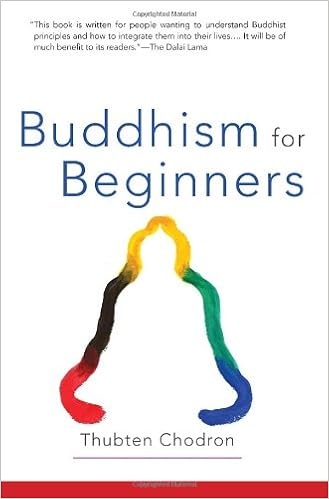
Buddhism for Beginners Review

Buddhism for Beginners. Thubten Chodron. 2001. Snow Lion. 160 pages.

Rating: 5/5

I've been interested in Buddhism for a while now. This is probably the third or fourth book I've read that touched on the subject. The others gave more of an introduction to the core beliefs, which makes this book make a lot more sense.

The format of the book is question and answer, such as what would occur between a teacher and student. The questions posed throughout the book were ones that the author was asked by numerous people. The goal here was to answer those questions in plain language that would make the topics more accessible. It also sought to correct some misinterpretations that occurred when Buddhism was becoming popular in the West.

I mentioned that having a basic knowledge of Buddhism helps to understand this book, but the author addresses the most important aspects in the first couple chapters. So the rest of the information presented wouldn't be completely confusing to someone with no prior knowledge. I would suggest reading and thinking about the information in the initial chapters two or three times before moving into the rest of the book though. In fact, Buddhism lends itself to that sort of assessment.

Everything is explained wonderfully. There were a few times where I needed to go back to previous sections to familiarize myself with something the author mentions, but that is not a fault of the book at all. It also covers a wide variety of topics. Some of the subjects are questions that I never would have thought to raise. This is a very inspiring book with information that can be useful to Buddhists and non-Buddhists alike.